
Chilled to the Bone? Keeping Your Hairless Cat Warm
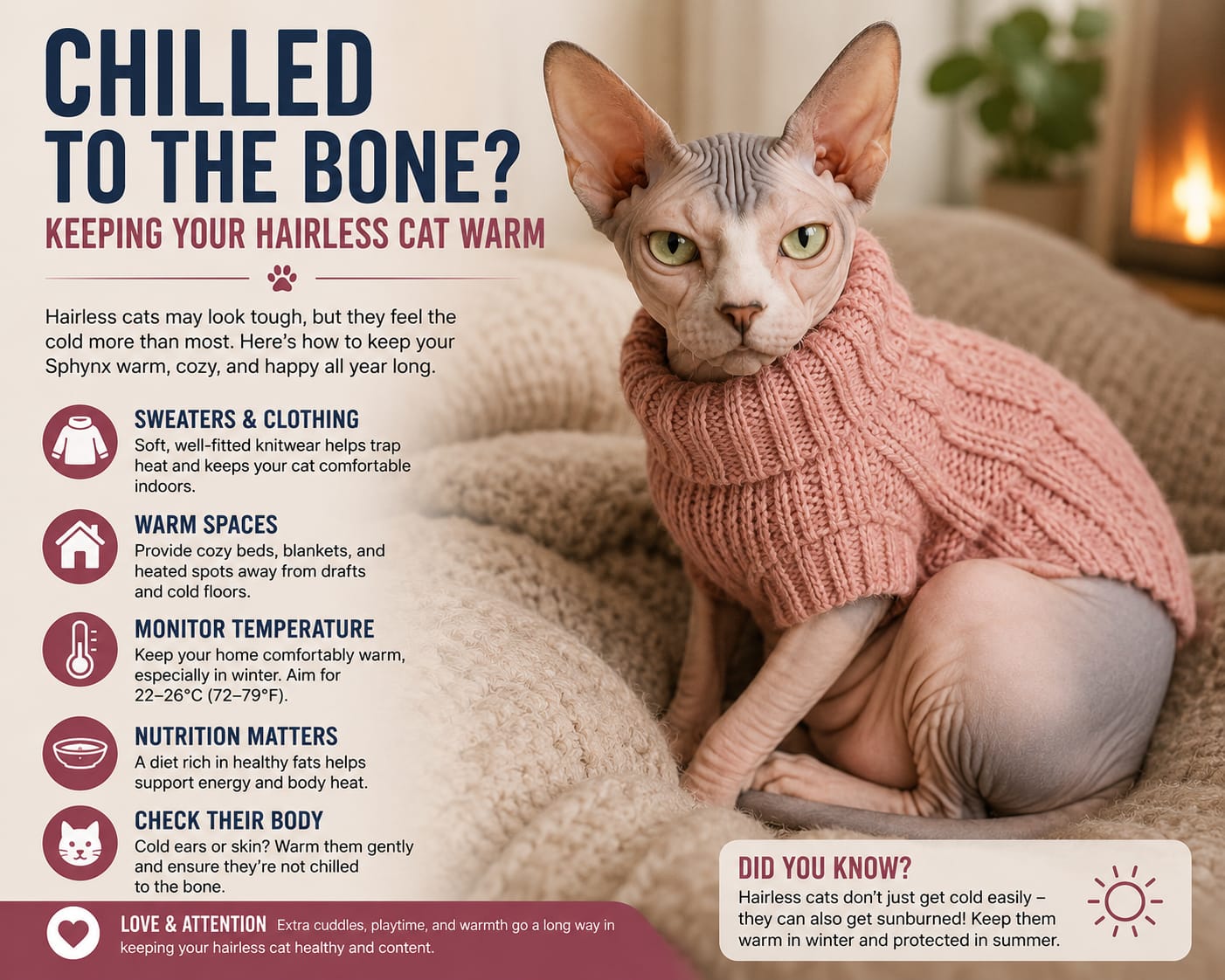
Table of Contents
Ever woken up to find your Sphynx tucked so deep under the covers that they are practically part of the mattress? Hairless cats are like little living radiators, but they lose heat faster than a cup of coffee in a blizzard. Keeping them comfortable when the temperature drops isn’t just about fashion; it is about their health.
Why your hairless cat feels the chill more than you think
Most cats have a built in winter coat that works like high performance insulation. Hairless breeds like the Sphynx, Bambino, or Peterbald are missing that entire layer of protection. Without fur to trap body heat against their skin, they are constantly fighting to stay warm. Honestly, if you feel a slight draft in the room, your cat is likely already shivering.
You might notice your cat spending a lot of time near the oven, on top of the refrigerator, or glued to your computer monitor. These are all signs that they are seeking out external heat sources because their own metabolism cannot keep up. One thing I’ve noticed is that a cold cat becomes a lethargic cat. They might stop playing or exploring as much because they are trying to conserve every bit of energy just to keep their internal temperature steady. This is where hairless cat winter clothes become a literal lifesaver for your feline friend.
It is not just about the ambient temperature in your house. The floor tiles, the leather sofa, and even the windowsills can feel like ice to a cat with no fur. Imagine walking around your house naked in 65 degree weather. You’d be reaching for a blanket pretty quickly. Your cat feels that exact same way every single day during the winter months.
The science of feline heat loss
Cats have a naturally higher body temperature than humans. While we sit comfortably at around 98.6 degrees, a cat’s normal range is between 100.5 and 102.5 degrees. Because the gap between their body heat and the room temperature is wider, the heat transfer happens much faster. For a hairless cat, this process is even more aggressive. Without a cozy cotton pet vest to act as a barrier, their skin is constantly losing warmth to the air around them.
Let’s be real, we often joke about how our cats act like they own the place, but they are actually quite vulnerable. When a hairless cat gets too cold, their immune system can take a hit. They become more susceptible to respiratory issues and skin problems. Keeping them dressed isn’t just about the “cute” factor; it is about maintaining that vital body heat so their system can focus on staying healthy instead of just staying warm.
Recognizing the signs of a cold cat
How do you know if your cat needs an extra layer? Look for these behaviors:
- The “Loaf” Position: They tuck their paws completely under their chest to minimize surface area exposure.
- Cold Ears and Paws: If their extremities feel like ice, their core temperature might be dropping.
- Hugging the Heater: If they are dangerously close to a space heater or fireplace.
- Excessive Cuddling: They are using you for your body heat (which is fine, but they need a backup).
- Skin Color Changes: Some hairless cats might look a bit paler or even slightly blueish in their extremities if they are very cold.
Choosing the right fabrics for sensitive skin
When you are shopping for hairless cat winter clothes, the material is everything. You can’t just throw any old fabric on a Sphynx. Their skin is incredibly sensitive and prone to oil buildup. If you choose a fabric that doesn’t breathe, you’ll end up with a greasy, broken out cat. That is a mess nobody wants to deal with.
Natural fibers are almost always the best choice. A cozy cotton pet vest is a fantastic option because cotton is breathable and absorbs excess oils. It is also soft enough that it won’t irritate the skin during a long day of napping. Avoid cheap, scratchy wool or heavy synthetics that can cause friction sores or rashes under the armpits. I learned this the hard way after buying a “cute” acrylic sweater that left my poor cat with red patches after just two hours.
Stretch is also a big factor. Cats are incredibly agile, and a hairless cat needs to be able to jump, stretch, and groom itself without feeling like it is in a straightjacket. Look for fabrics that have a little bit of Lycra or spandex mixed with the cotton. This allows the garment to move with the cat rather than against them.
Product Spotlight: Fruit Hoodies for Maximum Warmth
If you are looking for something that combines utility with a bit of personality, the fruit themed hoodies are a top tier choice. These are designed specifically with the smaller frame of a pet in mind, making them perfect for hairless cats who need that extra snuggle factor. You can find these soft fruit-themed hoodies for cats and small dogs that solve the problem of cold drafts while looking absolutely hilarious.
Why do shoppers love these specifically? Here is the breakdown:
- Hood Protection: Hairless cats lose a ton of heat through their heads. Having a hood you can occasionally pop up (if they tolerate it) is a huge plus.
- Soft Lining: These warm cat hoodies usually feature a plush interior that mimics the feel of another cat’s fur.
- Easy On and Off: The design allows for quick dressing without having to fight with tiny buttons or zippers.
- Oil Absorption: The fabric helps manage the natural oils hairless cats produce, keeping your furniture cleaner.
These hoodies are great for “low activity” days. If it is a lazy Sunday and your cat is planning on sleeping for sixteen hours, this is the outfit they want to be wearing. It provides a thick layer of insulation that keeps their core temperature stable even if the house gets a bit drafty.
The Layering Strategy: How to dress your cat
Just like hikers use layers to survive the mountains, your cat can benefit from a layering system. On really cold days, a single sweater might not be enough. Here is how you can stack their wardrobe for maximum comfort.
The Base Layer
This should be a thin, form fitting cozy cotton pet vest. It stays close to the skin, wicking away moisture and oil while providing a baseline of warmth. It should be light enough that the cat doesn’t feel weighed down but snug enough to stay in place as they move around.
The Mid Layer
This is where your warm cat hoodies come into play. A thicker hoodie or a fleece pullover goes over the base layer. This traps a layer of air between the two garments, which is one of the most effective ways to insulate. If your cat is okay with it, this combo is the ultimate defense against a cold house.
The Outdoor/Travel Layer
If you have to take your cat to the vet or travel during the winter, you might even need a windproof outer shell. Since hairless cats have zero protection against the wind, even a short walk from the house to the car can be a shock to their system. Always preheat the car before bringing your hairless cat inside.
Comparing Materials: What actually keeps them warm?
Not all pet clothes are created equal. Use this table to decide which material is best for your cat’s specific needs and your home’s climate.
| Material | Breathability | Warmth Level | Skin Friendliness |
|---|---|---|---|
| 100% Cotton | High | Moderate | Excellent (Best for sensitive skin) |
| Polyester Fleece | Low | High | Good (Very soft but can trap oils) |
| Wool Blend | Moderate | Very High | Poor (Can be itchy/irritating) |
| Acrylic Knits | Moderate | Moderate | Fair (Watch for snags on claws) |
Cleaning and maintenance: Dealing with the oil
Here’s the thing about hairless cats: they are oily. Without fur to distribute the oils, it just sits on their skin and, eventually, transfers to their clothes. If you don’t wash their wardrobe regularly, the clothes will become stiff, smelly, and actually start to irritate their skin.
I recommend having at least five or six different outfits so you can rotate them daily. Wash the clothes in unscented, hypoallergenic detergent. Avoid fabric softeners or dryer sheets because the chemicals can be way too harsh for a hairless cat’s skin. If you notice a “grease stain” on their favorite hoodie, a little bit of Dawn dish soap on the spot before tossing it in the wash works wonders.
You might be surprised at how fast a white vest turns yellow or brown. Don’t be alarmed; it is just the natural oils. Frequent washing also helps remove any dander or dust that might have stuck to the fabric, keeping your cat’s skin clear and healthy. If you are looking to expand your cat’s wardrobe, check out the cute pet costumes and interactive toys to find new styles that are easy to wash and wear.
Common mistakes owners make in winter
We all want to be great pet parents, but sometimes we overcompensate or overlook the little things. Here are a few common pitfalls to avoid when the mercury drops.
- Using Electric Heating Pads: These can get way too hot for a hairless cat. Because they don’t have fur, they can suffer thermal burns before they even realize they are too hot. If you use one, ensure it is pet safe and has a low maximum temperature.
- Neglecting the Sun: Just because it is cold doesn’t mean the sun isn’t strong. Hairless cats can still get sunburned through a window in the winter. If they are wearing a cozy cotton pet vest, it actually helps protect them from UV rays while they sunbathe.
- Forcing the Hood: Some cats hate having their ears covered. It messes with their equilibrium and their ability to hear. If your cat freezes and refuses to move when the hood is up, just fold it back.
- Buying the Wrong Size: If the clothes are too tight, they can restrict breathing. If they are too loose, the cat can get their legs stuck inside the neck hole, which can lead to panic and injury.
The “Freeze and Flop” and how to overcome it
If you’ve ever tried to put a sweater on a cat, you probably know the “freeze and flop.” This is when the cat suddenly acts like their legs no longer work and they just tip over onto their side. It is a classic protest move.
To overcome this, start slow. Don’t go straight for the heavy warm cat hoodies. Start with a very lightweight, sleeveless vest. Give them treats and praise while they are wearing it. Let them wear it for just five minutes, then take it off. Gradually increase the time. Most hairless cats eventually realize that the clothes make them feel much better, and they’ll start waiting by the laundry basket for their fresh “skin.”
Winter Prep Checklist for Hairless Cat Owners
Before the first frost hits, make sure you have these bases covered to ensure your cat stays happy and toasted.
- Check the Drafts: Walk around your house at cat level. Do you feel cold air coming from under the doors or through the windows?
- Update the Wardrobe: Make sure last year’s clothes still fit. Cats can gain a little “winter weight,” and tight clothes are uncomfortable.
- Bedding Upgrade: Swap out thin summer mats for high walled “donut” beds that trap heat.
- Humidifier Ready: Winter air is dry, and hairless cat skin can get flaky. A humidifier helps keep their skin supple.
- Skincare Routine: Keep up with baths, as the clothes will trap more oil against the skin than usual.
Creating a warm sanctuary
While clothes are the primary defense, your home environment plays a massive role too. You can create “heat zones” throughout your house. A heated cat bed (the low wattage, pressure activated kind) is a great investment. You can also place blankets in sunny spots. If you want to make your home feel as cozy for you as it does for your cat, adding some lighting and home ambiance decor can make those long winter nights feel much more bearable for everyone.
The funny part is that hairless cats are often the smartest members of the household when it comes to finding the warmest spot. If you can’t find your cat, check the laundry dryer that just finished or look for a lump under your duvet. They are experts at self preservation.
Safety first: When clothes go wrong
Always supervise your cat when they are wearing a new outfit for the first time. Some cats are “shredders” and might try to chew on the fabric. If they swallow bits of thread or fabric, it can lead to a dangerous intestinal blockage. Also, keep an eye on their movement. If they are struggling to jump onto their favorite perch, the outfit might be too restrictive.
The most important safety tip is to check their skin daily. Look for any signs of rubbing or redness, especially around the armpits and the neck. If you see irritation, give them some “naked time” and switch to a different style of clothing once the skin heals. A cozy cotton pet vest with wide armholes is usually the safest bet for preventing these issues.
Conclusion
Caring for a hairless cat in the winter requires a bit more effort than looking after a fluffy tabby, but the bond you build is well worth the extra laundry. These cats rely on us for their basic comfort in a way that most pets don’t. When you find that perfect balance of hairless cat winter clothes and a warm home environment, you’ll see a huge difference in your cat’s personality. They become more active, more affectionate, and generally much more relaxed.
Remember that every cat is an individual. Some might love the full coverage of warm cat hoodies, while others might only tolerate a simple vest. The goal is to keep them warm without causing them stress. By choosing high quality materials like cotton and paying attention to their behavior, you can ensure they stay toasted all season long. Honestly, there is nothing quite as cozy as a warm, dressed up Sphynx curled up in your lap on a snowy evening. It’s a win for the cat and a win for you. Keep those little radiators covered, and they will keep your heart warm in return.
Frequently Asked Questions
Do hairless cats really need to wear clothes in the winter?
Yes, they absolutely do. Because hairless cats lack fur, they have no natural way to insulate their bodies. Even if you keep your thermostat at a comfortable level, the lack of a protective layer means they are constantly losing body heat. Without hairless cat winter clothes, they can become stressed, lethargic, and more prone to getting sick. Wearing a sweater or a vest helps them maintain a stable internal temperature, which is vital for their metabolism and overall health. It is not just a fashion choice; it is a fundamental part of their care during colder months.
What is the best material for hairless cat winter clothes?
The best material is usually 100% cotton or a high cotton blend. Cotton is soft, breathable, and excellent at absorbing the natural oils that hairless cats produce. This helps prevent skin irritation and breakouts. A cozy cotton pet vest is a great base layer because it is gentle on their sensitive skin. While fleece is excellent for extreme warmth, it doesn’t breathe as well as cotton, so it is best used as an outer layer or for shorter periods. Avoid scratchy fabrics like wool or cheap synthetics that can cause rashes or discomfort.
How often should I wash my cat’s clothes?
You should aim to wash their clothes every two to three days, or even daily if your cat is particularly oily. Hairless cats produce sebaceous oils that normally get distributed through a cat’s fur. On a hairless cat, these oils stay on the skin and quickly transfer to their clothing. If the clothes aren’t washed frequently, the oil buildup can become rancid, smell bad, and cause skin infections or acne. Always use a mild, fragrance free detergent and avoid fabric softeners, as these can irritate their skin.
Can my cat wear clothes all day and night?
Most hairless cats can wear clothes for extended periods, but they do need “naked time” every day. This allows their skin to breathe and gives them a chance to groom themselves properly. It also allows you to inspect their skin for any signs of redness, irritation, or oil buildup. Many owners choose to let their cats go without clothes while they are tucked under warm blankets at night, or they provide a very light, loose fitting garment for sleeping. Always ensure the clothing is safe and doesn’t have any strings or buttons that could be a choking hazard if they are left alone.
How do I know what size to buy for my Sphynx?
Measuring is key. You need three main measurements: the circumference of the neck, the circumference of the chest (at the widest point behind the front legs), and the length from the base of the neck to the base of the tail. Hairless cats have a unique body shape with a deep chest and a slim waist, so look for brands specifically designed for them or for small dogs with similar builds. When you are looking at warm cat hoodies, make sure the armholes are large enough to allow for a full range of motion, and the neck isn’t so tight that it interferes with their breathing or swallowing.
Latest Posts 🔥


Visit Store

Unlock Exclusive Offers!
Unlock Exclusive Pet & Home Spooky Deals Limited-Time Access!
Your Information Will Not Be Shared With Anyone.